Media Log
This page contains a relatively exhaustive list of every piece of TV, Movie, Book and Video Game I have watched/played/etc. I say "relatively" because I might forget to log stuff oops.
Reviews, where available, are kept mostly spoiler-free, but there may be trace amounts of spoilers.


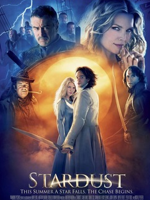
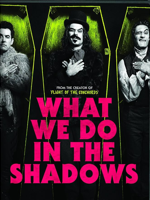
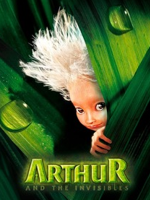
This was one of those films that I owned on DVD as a kid and would watch over and over again because there was nothing else to do. And even then, I kind of hated it.
It's just bizarre. It somehow feels like a terrible dub, except it was literally created to be in English first. The voice actors are trying (somehow they got Madonna and David Bowie for this), but to what end? All the dialogue is so poorly paced that conversations are genuinely hard to follow at times.
Everything from the character designs, to the world-building, to the animation quality feels like a forgotten, mid MMO from 2004.

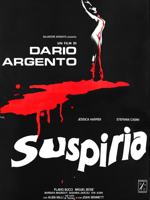
The best scenes of this movie feel like they literally just filmed Christopher Walken hanging out with the alien props fully unscripted.
The rest of the movie is just kind of boring. And ultimately, it all feels very pointless.
...and they never came back..
IT SLAPS.
This wasn't really what I expected from the trailers. It's not an ultra-scary horror film, which is fine by me. I don't think horror needs to be deeply scary for it to work as a great movie.
Instead, this film is way more experimental and strange. It's a more conventional story than Longlegs (2024), but it still has the energy of a strange dream or modern-day fairy-tale. And it tackles similar themes of childhood abuse and trauma.
I strongly recommend watching this film at the cinema if possible or with a group of friends. There's a moment where one of the focal characters, Justine, is asleep in her car outside of a scary house. I won't say what happens next, but everybody in our screening was nervously laughing, gasping and whispering. It was an electric moment. Also the ending, where the comedic charms of the film really shine, had everybody HOWLING.
I also found the soundtrack to be really compelling. It has a cute, whimsical energy at times, but can also be very grating (complementary) and industrial.
Will definitely be giving this film multiple watches, and thinking about its meaning.
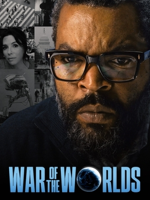
If you're going to watch this (which you should!), DO NOT WATCH IT ALONE.
This film is absolutely a masterpiece of trash, but it is vastly improved by having a group of friends to quip with.
Also, my PC broke not long after watching it. Coincidence?
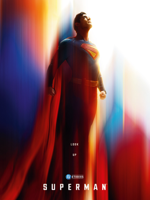
You've probably seen a million Superman (2025) takes. It's a really good film, not much more to add.
...I love Mr. Terrific and I was so happy to see him on the big screen and he was really cool :o)
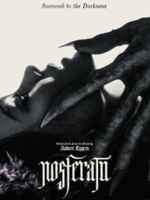
I'm so normal about this movie, I promise.
Gothic literature was my first love, and this move reawakened that love for me. I fear it may have ruined vampires for me, because no other depiction of vampires can really compare. Watching this movie after centuries of media watering down vampire mythos was so reinvigorating.
It's especially wonderful when viewed as a sort of sister film to 'The VVitch', also by Robert Eggers. 'Nosferatu' almost feels like another attempt at making 'The VVitch', without an uncontrollable goat on set and less child actors, which Robert Eggers famously struggles with. Both films have a feminist quality, as they focuse on the limited autonomy of historical women, as well as the shame and blame frequently placed upon women.
'Nosferatu', more explicitly than 'The VVitch', delves into the theme of female sexuality and the societal fears surrounding it, which was of course always an element of the vampire mythos. However, in our current media and cultural landscape, Robert Eggers is given much more leeway to fully explore that theme than any Victorian author would have been able to. Through Thomas, we also see the way the patriarchy negatively impacts men who, for various reasons, fail to achieve the masculine ideal. In the case of Thomas, he is explicitly a man who cannot fulfill his percieved financial obligations to his friends and his wife. He is also implicitly a male victim of sexual abuse.
A lot of people find Robert Eggers' commitment to historical accuracy to be gimmicky, or imply that it stems from a lack of creativity on his behalf. I believe that criticism is grasping at straws by critics who want to find a reason to hate a director who is simultaneously talented, experimental and beloved by the general public. Because Robert Eggers does not let his commitment to historical accuracy get in the way of commentating on contemporary political discourse (Are women not still shamed for their sexuality? Do male sexual abuse victims no longer feel shame? Are we not all still beholden to the whims of those more wealthy than us?). Setting a story within the past in fact only amplifies the ways our societal attitudes have stagnated.
And last but not least, the movie is absolutely gorgeous. So many wonderfully creative shots (that final shot!), expertly crafted costumes (Count Orlok's coat!) and amazing prosthetics (if you've seen the movie.. you know what I mean.)
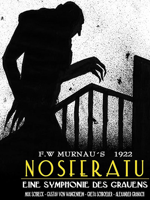
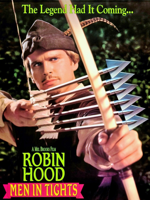
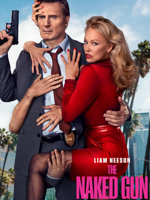
Yeahhhh, it's ok.
Like 50% of the jokes are ok and like 20% are really good (10% have aged horribly). But the film is mostly held together by the glue of the cast's performances, which are charming and entertaining.
I'm not a big comedy person at the best of times, but this was a pretty entertaining watch.
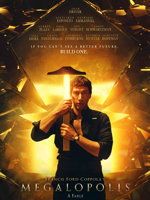
Some people have argued that Megalopolis is poltically incoherent. For me, it was very clear.
The moral of Megalopolis is that women are lying, cheating whores who will exploit you for their own gain, while male artists should be allowed to do whatever they want with impunity. The ideal woman is one who stands beside you, supports your art with no ambitions or hobbies of her own, and recites meaningless, fake-deep quotes in between cooking you food and popping out babies.
The performances of the actors were all great. But it's all in service of a film that's trying to mask its shallow "We Should Improve Society Somewhat" messaging with gallons of ugly CGI and philosophical quotes lifted from elsewhere.
That said, Aubrey Plaza as Wow Platinum is the sexiest a woman has ever been on screen.
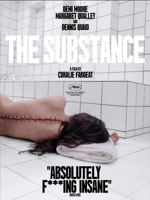
This is the craziest film I've ever seen. Every time I thought it was going to end, it kept going, and it got 20% wilder every time. The best summary I can give is "Body-Horror Barbie".
This film has such a strong, feminist backbone. Barbie was sort-of Feminist 101, which was... fine. It's a family film meant to be enjoyed by all generations of women and, as such, the feminism in Barbie is surface-level and easy-to-digest. Friendly. Comforting.
On the other hand, The Substance is pissed off. It has so much disgust towards society's treatment of women. Despite being so absurd, it tackles the topics of unrealistic female body standards, insecurity and the tragedy of female in-fighting with real deftness and vitriol. The story, which is constructed like a modern-day fairytale, works not only as a cautionary tale against plastic surgery and striving to appease the male gaze, but also a metaphor for self-loathing and mother-daughter conflict.
But overwhelmingly, it's a very symapthetic film. It's easy for a lot of media about female vanity to look at its subjects with distain, but Elisabeth's emotional pain feels incredibly real and is handled with so much dignity, especially contrasted with the batshit insanity of the things that happen to her and around her. Demi Moore's performance is really spectacular. She deserves an Oscar, but probably won't get one.
As for the body-horror itself. Yikes. I am somewhat sensitive to body-horror and I decided to see this on a day where I was already feeling somewhat nauseous. It's a miracle I didn't throw up in the cinema. The sound design is masterful. Every squish and squelch was emphasised tenfold. There's a scene of a man eating shrimp near the beginning of the film that is absolutely revolting. The film ramps up the horror as it goes, so just when you think you've seen the worst, weirdest thing, it pushes further.
I will never eat chicken on the bone ever again.
I do have a mild concern with the content of the body-horror. A problem inherent within most body-horror is ableism. To extract horror from somebody who looks deformed in some way is pretty nasty when you think about it. That said, because the film is so sympathetic to its protagonist, it actually seems to highlight this distasteful part of body-horror, and even evokes comparisons to films like The Elephant Man.
Likewise, a lot of the horror focuses on how gross it is to be old, which may seem like a hypocritical choice for a film about toxic beauty standards. Horror has long had a history of using naked old women for cheap shock value. Again, to me, this film almost feels as though it's holding a mirror up to that tradition, making an audience contemplate why they're "afraid" of old women, and if there's anything to fear at all. But that could be me being too generous, I don't know.



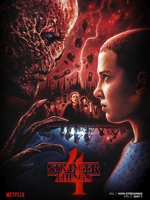

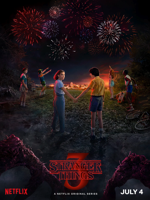

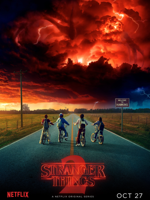

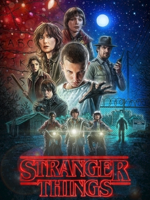

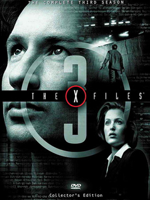
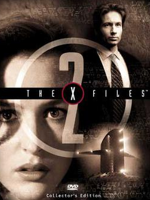
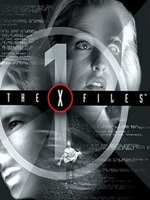

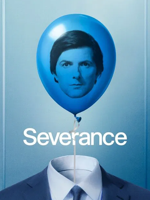
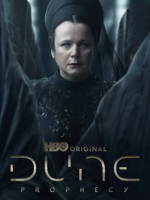
This series somehow got good reviews, so me and my friends might be alone in these opinions. But we found this series absolutely awful.
If you're a fan of Dune, you're gonna be annoyed. If you're not a fan of Dune, you're gonna be confused, and bored, and annoyed.
There's a lot of theoretically interesting stuff here, but it increasingly feels like nothing is happening. Episodes feel simultaneously way too long and yet way too shallow. It's based on the Brian Herbert Dune books (son of the original Dune author, Frank Herbert), so don't expect rich world-building or complex scenes. Instead, the world of Dune is flattened to become as comprehensive as possible.
The acting is good, I think the costuming is boring but serviceable, especially on a TV-budget.
I had a great time watching it with my friends, but we were consistently taking the piss. Maybe if you go into with a more positive mindset, you'll find it worthwhile.


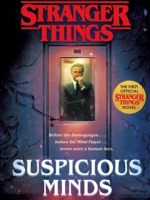
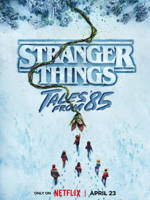
If you think you know the truth behind Dr. Brenner's experiments at Hawkins Laboratory, prepare to have your mind turned Upside Down in the first official Stranger Things novel.
It's the summer of 1969, and the shock of conflict reverberates through the youth of America. As a student at a quiet college campus in the heartland of Indiana, Terry Ives couldn't be farther from the front lines of Vietnam or the protests in Washington.
But the world is changing, and Terry isn't content to watch. When word gets around about an important government experiment in the small town of Hawkins, she signs on as a test subject for the project, code-named MKULTRA. The remote lab, deep in the woods, contains a mystery Terry is determined to uncover.
Behind the walls of Hawkins National Laboratory—and the piercing gaze of its director, Dr. Martin Brenner—lurks a conspiracy greater than Terry could have ever imagined. To face it, she'll need the help of her fellow test subjects.
Amid the rising tensions of the new decade, Terry Ives and Martin Brenner have begun a different kind of war—one where the human mind is the battlefield.
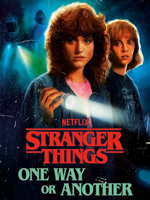
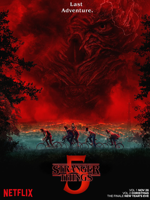
Following the events of Stranger Things: Season 4, Nancy Wheeler and Robin Buckley are hot on the heels of a new mystery—and they won’t stop until they solve it.
Hawkins, Indiana, is in recovery. It’s been two months since Vecna’s earthquake tore through the town, and its residents are still reeling from the devastation. Nancy Wheeler has spent every waking minute on the hunt for Vecna, but he’s continued to elude her. How can she head to Emerson for college in the fall if Hawkins is still under the influence of the Upside Down?
When fellow classmate Joey Taft starts acting shifty at graduation, Nancy is convinced Vecna’s found his newest victim. Joined by fellow amateur sleuth Robin Buckley, Nancy doesn’t waste any time questioning Joey. What the girls discover leads them down the path of a bigger story than The Hawkins Post could ever have assigned Nancy. Why are people around town suddenly getting sick? Why is there a strange man tailing Nancy as she investigates? And, most important, does this even have anything to do with the Upside Down?
Together with Robin, Nancy embarks on a dangerous quest for the truth. The deeper the two dig, the further Nancy finds herself drawn into a web of intrigue that threatens to trap her in Hawkins . . . forever.
Goddamn. This book fuckign rules.
For full context, I’ve been reading Dune Messiah for what feels like a billion years. And the last book I read before starting this one was Runaway Max, a book for babies. I needed One Way or Another more than I even realised. It doesn’t re-invent the wheel, but the wheel it makes is really good.
This book’s synopsis intrigued me immensely from the get-go. It’s set during the awful 18 month time-skip between Season 4 and 5, which I think is a great idea. In theory, you could slap a bunch of expanded universe stories into a blank space of time like that. Unfortunately, Season 5 makes it clear that nothing particularly supernatural or interesting happened in those 18 months. So I was super curious to see how this book would manage to tell a compelling mystery with that particular constraint.
And against all odds, it pulled it off! This author is so good at writing suspense and mystery. I genuinely couldn’t put the book down. While I don’t think the final reveal of the conspiracy is that interesting, it’s about the journey not the destination. And this is a super wild ride with great twists and turns. I also enjoyed the analysis of Nancy as a character, and her interactions with people. I especially enjoyed seeing more of Nancy and Robin hanging out.
I found Jonathan to be genuinely fucking insufferable, though. However, the book also does a good job of foreshadowing his and Nancy’s relationship troubles in the show. In fact, the book kind of makes Season 5 better by giving the reader more insight into the characters’ mental spaces heading into the season. This particular line from Jonathan during their big argument made me wince:
“But not everything is the end of the world. I guess - I guess I’m just saying, when you hear hoofbeats, think horses. When you see flickering lights, think faulty wiring.”
I am now blaming Jonathan for Nancy not realising that Mr Whatsit is Vecna. Holly’s blood is on your hands, Byers!
There was one thing that I did find a little annoying: A major point of tension in this book is Nancy’s inability to live in the moment and face reality. And this is primarily shown through her absolute conviction to go to Emerson in the fall; She needs to find Vecna so she can save Hawkins so she can go to Emerson specifically in the fall. Part of this is because Hawkins represents conformity and a lack of ambition to Nancy. She believes if she stays in Hawkins, she’ll be doomed to living the same housewife nightmare that her mother does. Her mother shares this anxiety too, and the pair get into a huge argument when Nancy eventually realises that she won’t be able to stop Vecna in time.
But can’t she just wait a year? And go to Emerson later? Maybe I’m missing something about the American education system, but I don’t think taking a gap year means you’re throwing away your dreams. I understand why Nancy never considers deferring to be an option, but nobody around her ever brings it up either. It just felt like a somewhat pointless conflict because there’s a very easy middle ground that Nancy can take. Emerson isn’t going anywhere (unless the world ends)!
This is my plea to Netflix: If you make a million more of these books, I will forgive you for Season 5.
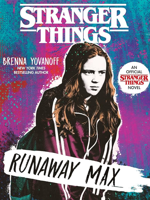
Meet Max. She's from California. She skateboards. Her family just dumped her in the middle of Indiana. And she's really not ready to call Hawkins her new home.
Whether she's facing off against her bully brother, Billy, the new kids at school, or monsters abound, Max tackles life with sass and grit. This must-read novel based on the hit Netflix series Stranger Things explores Max's past–with all the good and the bad it's given her–in the lead up to the thrilling season that introduces our favorite new member of the gang.
I went into this book with very low expectations, not only because the book is clearly from the more tween-oriented batch of Stranger Things but also because I believed this book was set pre-season 2 and would feature none of the main cast outside of Max and Billy. I was wrong about one of these things. Runaway Max is definitely written for kids, but I was pleasantly surprised to learn that this book is actually a retelling of Season 2 from the perspective of Max.
The new content is genuinely really well-done. We get a lot of insight into Max’s childhood, such as her relationship with her bio-dad, her friends back in California, and her struggles to acclimate to her new home life with Neil (step-dad) and Billy. These scenes are written with a real sensitivity, and Max’s character voice really shines through. There’s a particular scene, where Max comes home from trick-or-treating and she hides in her room to count her candy hoard while her step-dad abuses Billy in the living room, that really caught me off guard, emotionally. I also found the subtle mystery surrounding Nate, Max’s former best friend, to be fairly engaging. The author is clearly very comfortable writing these harsh slice-of-life vignettes.
Unfortunately, the scenes from Season 2 are where this book completely falls apart. The people behind this book seem aware that straight up just retelling huge chunks of Season 2 would be boring as fuck, but they still need to include those scenes for Max’s character development and the plot. So they try to get around this by telling those scenes in the flattest, quickest way possible, like ripping a plaster off. This completely flattens all momentum in the story.
And speaking of momentum, this author is fully incapable of writing suspense, at least when it comes to supernatural mysteries. Arguments between Billy and Neil are written well enough, but the scenes involving Dart, or the other demodogs, or meeting Eleven for the first time, completely fall flat. Here’s an actual quote from what should be a very tense scene:
“The demodogs were out there, hunting through the woods in a frantic pack. I could almost feel them rushing toward us. And then, without warning, something happened. There was a colossal thump, and a dark shape crashed through the living room window and slid bonelessly to the floor.”
“And then, without warning, something happened”???? That’s criminally bad. Furthermore, since Max is introduced in Season 2, most of the scenes that involve her involve Season 1 characters info-dumping information onto her. So we get long stretches of the book where she’s just listening to somebody else talk. Near the end of the book, there are also large sections where Max has literally nothing to do except for standing around watching other characters, who she doesn’t know very well, do plot stuff. This is ignorable in the TV show since it’s an ensemble story, but it’s exhausting in written form:
“We stood in the middle of the road while Dustin and Will’s brother messed around in the gatehouse, trying to figure out how to open the gate.
We were still just standing there when all the lights came on at once and the gate slid open. Jonathan and the girl got back in their car and drove into the compound to look for Will. The rest of us waited.
While we did, Lucas told me about Will and the lab…”
Wow. That’s so interesting.
Overall, I enjoyed this book more than I expected to, and I think it would be a hit with preteen girl fans of Stranger Things. But I am, regrettably, no longer a pre-teen girl.
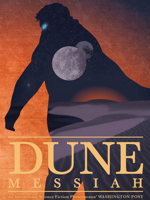


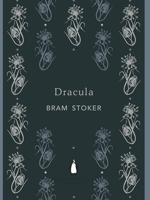
Oh boy.
There's a lot to like about 'Dracula'. Specifically, the horror itself is very well executed. There were a small number of scenes that genuinely shocked me, mostly just because I wasn't aware that Victorian literature could be that graphic. The slower moments of suspense are enjoyable, and the pace of the more exciting scenes is quick and tense.
There is a sizeable group of main characters and they're all quite likeable, if a bit similar, with Mina Harker and Quincey Morris (a Texan cowboy!!) being stand-outs. The first 2/3rds of the book are spent essentially assembling this group of would-be vampire slayers, chronicling their encounters with Count Dracula through diary entries, telegrams and letters, and it's all quite well-paced and exciting.
But once the group comes together and commits to killing the Count, the book just becomes an absolute slog. Oh my God the dialogue. Nobody ever shuts the fuck up. I'm looking at you, Dr. Van Helsing, in particular. I swear to God, they all just keep having the same damn conversation over and over and over and over again about how much they all love each other and how much they hate Dracula.
Dracula himself is a pretty mid villain. Any possible threat he poses is immediately snuffed out by the main cast of characters being way too level-headed and competant. There's an exciting moment near the end of the book, where Dracula stands to potentially pit the friend group against Mina. This ends up never really mattering because everybody loves and trusts Mina fully. Nobody ever disagrees with Van Helsing's plans of action, so his plans always go off without a hitch. I honestly almost feel bad for Dracula, there's basically nothing he can do against them.
It's like the book was written specifically for people who get mad at horror protagonists who act irrationally. So what you end up with is a book where, excluding the first 2/3rds-ish, a group of hyper-intellegent, strong-willed, fearless rich people bully a vampire who just wants to go home.
It's a shame because the start is so strong. And there are so many opportunities for the book to jump off and become more tense. But it never takes those opportunities because it would require writing imperfect protagonists.
From a historical perspective, the book is a joy with what it has to say about New Women, technology and the attitudes towards foreign cultures. But be prepared for the ending to drag. Dragula.